



PESTS · RODENTS

Rodent exterminator in Quebec Mice, rats, and voles

Our exterminators identify, eliminate, and prevent rodent infestations in your home, business, or industrial facility — with entry-point sealing and secure bait stations.

Pestora expert Speak to an expert (514) 546-2050
Pestora technician at work in Quebec
Pestora pest management specialist
Pestora team at work
Local & Fast

Three divisions serving you across Quebec

Identify the nearest Pestora division for fast intervention against your rodent infestation.

Coming soon

Pestora Gatineau / Outaouais

555, boulevard Saint-Joseph
Gatineau, QC J8Y 4A1
Number coming soon View division
Pestora expert

Not sure which division? — Call us at (514) 546-2050

Species classification

The major families of pest rodents in Quebec

Each rodent family has its own behaviour, preferred zones, and specific treatment methods. Precisely identifying the species is the first step toward effective extermination: a Norway rat isn’t treated the same way as a house mouse.

Commensal rodents

Common mice and structural rats. Species that live alongside humans, exploiting heating areas, food sources, and hiding spots in walls and ceilings.

Field rodents

Voles and field mice. Increased presence in fall when cold drives them to seek indoor shelter. Damage to gardens, lawns, foundations, and outdoor lumber.

Aquatic rodents

Muskrats and sewer rats. Found along waterways, in municipal sewers, damp foundations, and flood-prone basements.

Arboreal rodents

Squirrels, chipmunks, and groundhogs. Biologically rodents, but handled as wildlife due to Quebec's regulations on wild species.

Main requests

The most treated rodents in Quebec

Six species account for the vast majority of calls received by our rodent exterminators. Each species has its own treatment protocol, seasonality, and infestation signs. Click a species to discover our detailed treatment methods.

Commensal

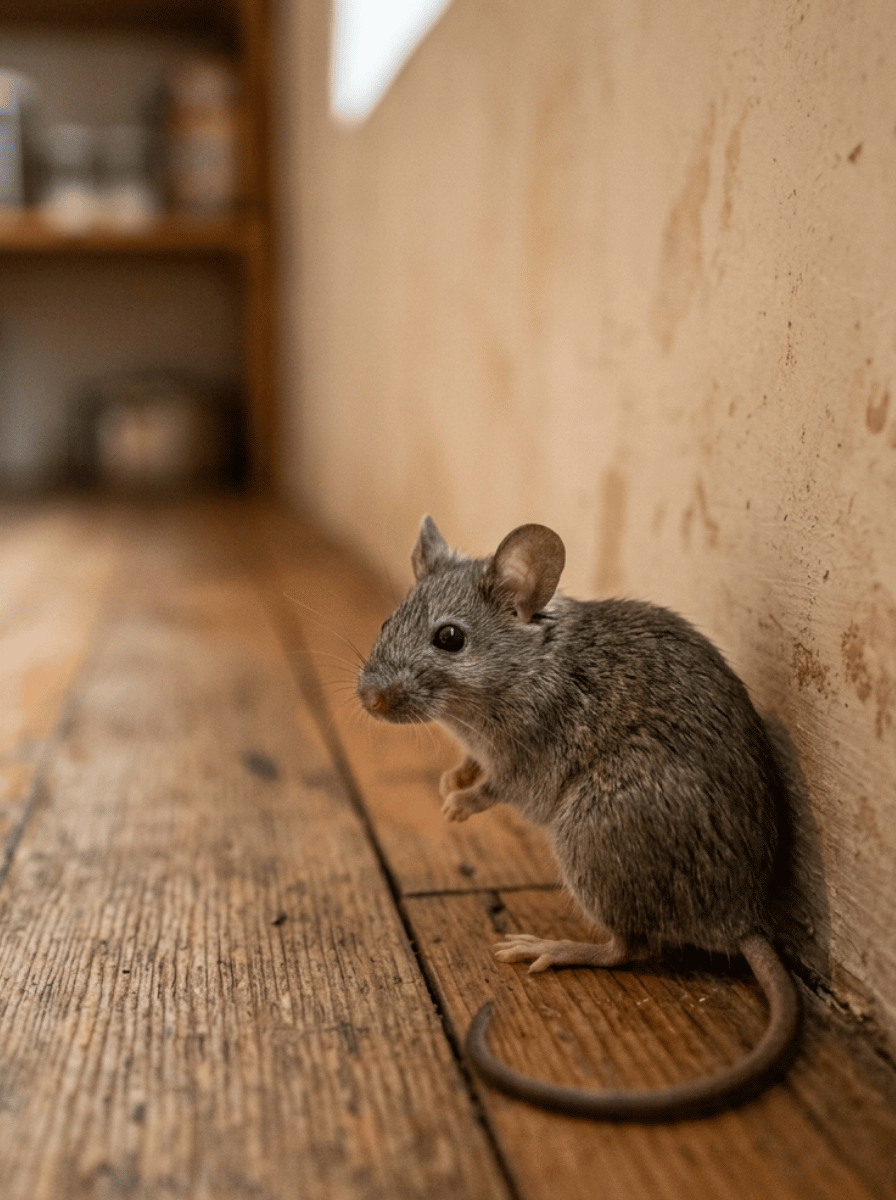
House mouse

The most treated species in Quebec. Small (7–10 cm), grey or brownish, can squeeze through a 6 mm opening. Rapid reproduction: one pair can produce over 200 descendants per year.

Mouse control
Commensal

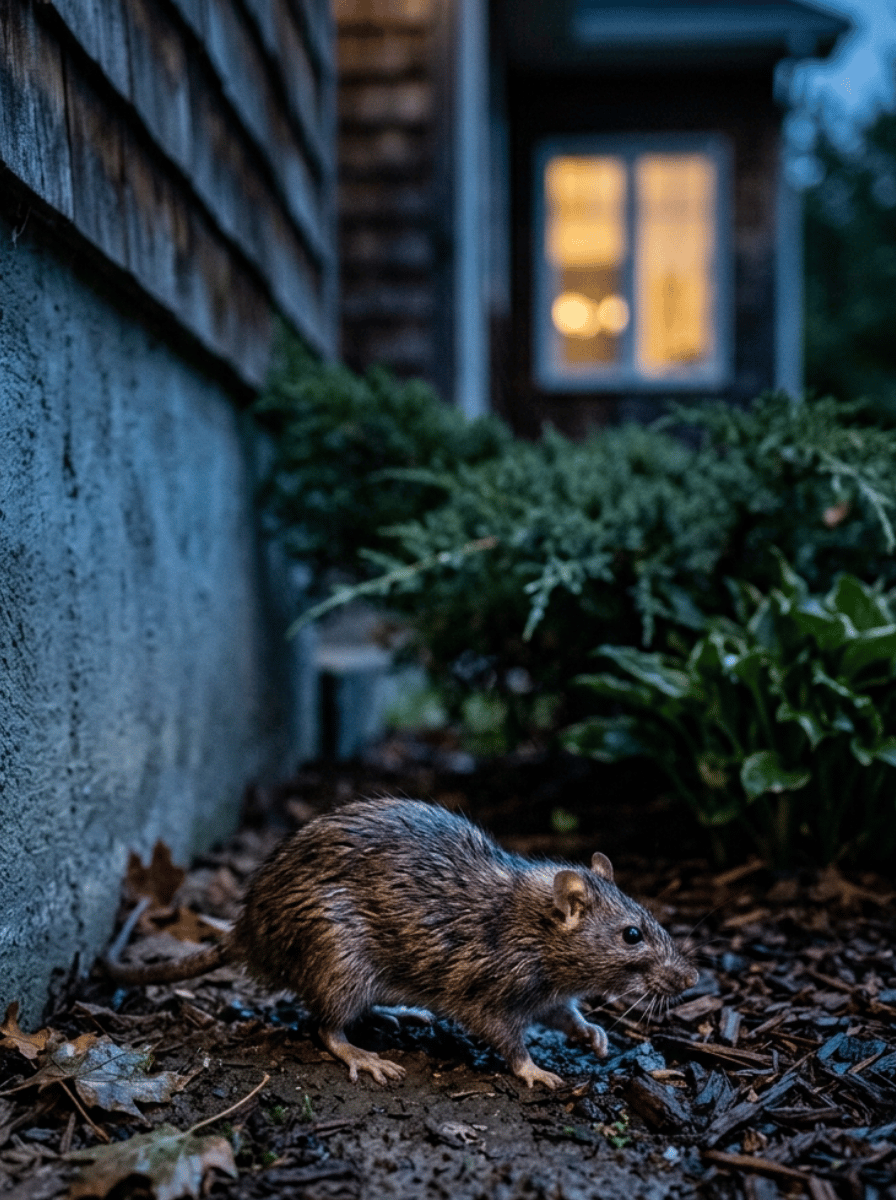
Norway rat

Also known as the brown rat, Norway rat, or sewer rat (Rattus norvegicus). The largest rat found in Quebec (20–25 cm without the tail). Lives mainly at ground level, in basements, sewers, and foundations.

Norway rat control
Commensal

Black rat

Also known as the roof rat (Rattus rattus). Smaller and more agile than the Norway rat. Nests up high: attics, drop ceilings, trees, and rooftops. Less common in Quebec but on the rise.

Black rat control
Field

Voles and field mice

Small rodents of fields and underbrush. Increased presence in fall when they seek winter shelter. Damage to gardens, outdoor electrical conduits, and foundations.

Vole control
Aquatic

Muskrat

Large aquatic rodent found near waterways, marshes, and ditches. Causes damage to dykes, banks, and water-management structures. Specialized treatment required.

Muskrat control
Arboricole

Eastern chipmunks

Small striped rodents, often confused with squirrels. Biologically rodents but handled as wildlife. Dig tunnels under decks, patios, and foundations.

View wildlife removal
Our action plan

The Pestora method applied to rodents

Four structured steps tailored to each rodent species, from identification through to lasting exclusion. Simple surface trapping won’t resolve an established infestation.

Pestora expert Speak to an expert (514) 546-2050

01/ Full inspection

Species identification, locating of entry points, nesting areas, and food sources. Mapping of pathways, droppings, and visible damage both inside and outside the property.

02/ Targeted elimination

Safe solution: Use of bait stations (mechanical traps and Health Canada-approved anticoagulants), adapted to the species, environment, and the presence of children or pets.

03/ Exclusion and sealing

Sealing of every identified entry point: foundation cracks, pipe penetrations, ventilation openings, gaps under doors. Without physical exclusion, the infestation will return.

04/ Follow-up and prevention

Follow-up inspection two to three weeks after the intervention to confirm elimination. Preventive recommendations on waste management, food storage, and exterior landscaping. Written warranty.

Peace of mind

Why treat a rodent infestation quickly

Rodents aren’t just a visual nuisance. They pose three major risks: health (transmission of hantavirus, leptospirosis, salmonella, and other pathogens via droppings and urine), structural (gnawing on electrical wires — a documented cause of many residential fires each year in Quebec — destruction of insulation, damage to framing and plumbing), and economic (contamination of stored goods, inventory loss in commercial settings, potential loss of MAPAQ or HACCP certification). Add to that rapid reproduction: an untreated pair of mice can produce over 200 descendants in a year. The earlier the intervention, the simpler, more targeted, and more economical it is.

Service categories

Beyond rodents

Pestora treats every type of pest, not only rodents. Discover our services for the other categories.

FAQ

Frequently asked questions about rodent control

How do I know if I have a rodent infestation?

Several signs indicate an active presence: droppings (small dark elongated pellets near baseboards, in cabinets, or in storage areas), scratching sounds in walls or ceilings at night, a particularly strong urine odour in enclosed spaces, grease marks along walls (rodent travel paths), gnawed food packaging, and nesting materials (shredded paper, insulation). A single mouse usually suggests an established colony.

Three risk categories. Health: rodents carry hantavirus, leptospirosis, salmonella, and several other pathogens transmitted via droppings, urine, and bites. Structural: they gnaw on electrical wires (a documented cause of multiple residential fires each year in Quebec), insulation, wood, and plumbing. Economic: contamination of stored goods, inventory loss for businesses, and risk of non-compliance with MAPAQ or HACCP standards in food settings.

A mouse can fit through an opening as small as 6 millimetres (about the size of a pencil), a rat through 12 millimetres. Typical entry points are foundation cracks, pipe and electrical wire penetrations, unscreened ventilation openings, gaps under garage doors, damaged soffits, and openings around exhaust vents. Systematic exterior inspection is the first step to any lasting exclusion.

For a typical household infestation, complete elimination usually takes 2 to 4 weeks. First visit: inspection, placement of bait stations and traps, identification of entry points. Follow-up visit 2–3 weeks later: removal of devices, sealing of access points, confirmation of elimination. For larger commercial or industrial infestations, a multi-month integrated pest management program may be recommended.

Yes. All baits used by our exterminators are Health Canada-approved and placed in secured bait stations, inaccessible to children and pets. For at-risk areas, our technicians may prefer mechanical traps (no poison) or physical exclusion approaches. Every intervention is adapted to the presence of vulnerable occupants, with clear safety instructions.

Several measures significantly reduce risk: storing food in airtight containers, managing trash bins with tightly sealed lids, eliminating standing water sources, systematic sealing of cracks and entry points, trimming vegetation away from foundations, removing firewood stored against the house, and regular cleaning of basements and attics. For businesses and industrial facilities, a documented preventive program is the most effective solution.

Biologically, yes: squirrels, chipmunks, and groundhogs belong to the order Rodentia. However, under Quebec’s regulatory framework, they’re considered wildlife and their management is governed by specific rules on capture and relocation. At Pestora, we treat these species under wildlife removal, separate from services for mice, rats, and voles.

Rates vary based on species, infestation scale, area to be treated, and property type. A residential intervention for a moderate mouse infestation differs significantly from a rat control program for an industrial warehouse. All our assessments are free, with a fixed price communicated before any commitment. The cost of a professional intervention is consistently lower than the cost of repairs and losses from an untreated infestation.

Act now

A rodent infestation to treat ?

Rigorous inspection, targeted elimination, sealing, and a written warranty. Free, no-obligation quote.